
Introduction to SAP
SAP stands for Systems, Applications, and Products in Data Processing.
It is a global software company headquartered in Walldorf, Germany and widely recognized for providing enterprise solutions that help businesses manage their operations productively.
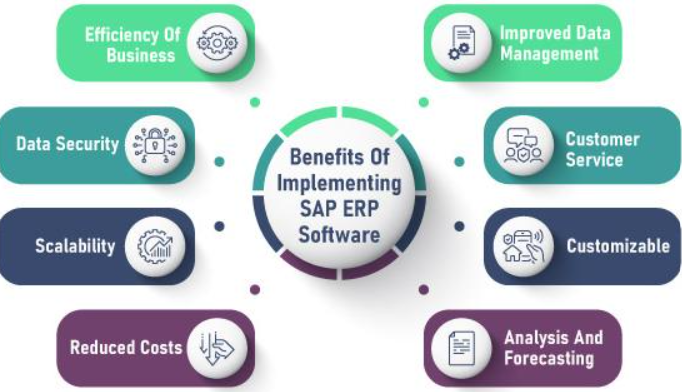
SAP is primarily used as an Enterprise Resource Planning (ERP) system. Multiple business functions, including finance, sales, procurement, and human resources, are integrated into a single unified platform. By integrating, organizations can maintain consistent data across departments and enhance overall coordination. Implementing SAP allows companies to streamline their workflows, improve data accuracy, and improve decision-making. By having a centralized system, different teams can access real-time information, leading to increased productivity and reduced operational delays.
The primary objective of organizations is to utilize SAP is
- Completely automates the business process
- Minimizing the amount of manual work, duplicate data, and errors.
- Enhancing reporting by utilizing shared data.
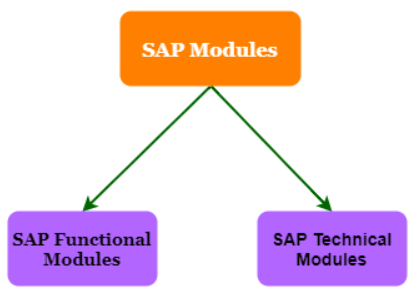
SAP Functional Modules
- FICO – Finance & Control
- PP – Production Planning
- MM – Material Management
- SD – Sales & Distribution
- WM – Warehouse Management
- QM – Quality Management
- HR – Human Resources
- CRM – Customer Relationship Management
SAP Technical Modules
- ABAP – Advanced Business Application Programming
- XI – Exchange Infrastructure
- Net viewer
- Basis
- BIW – Business Information Warehousing
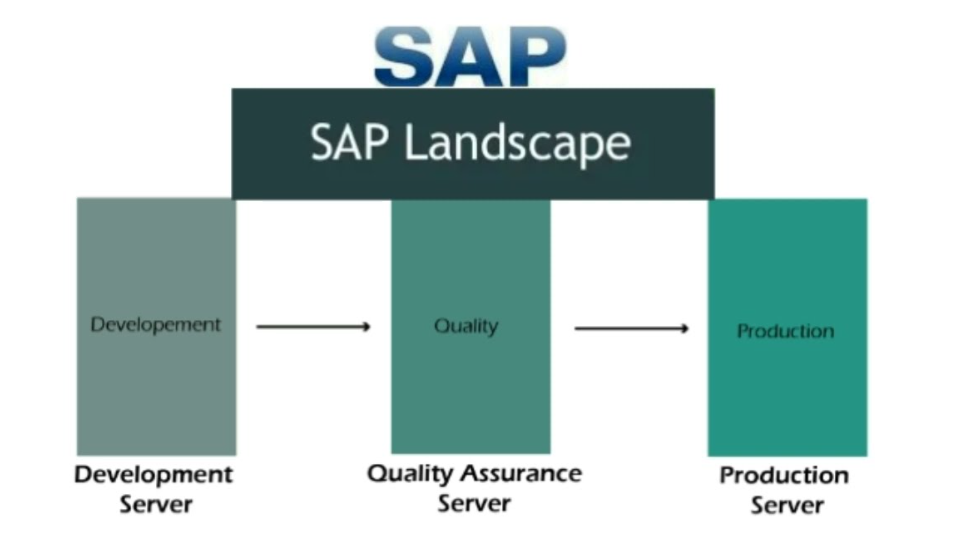
SAP System Landscape
SAP implementation projects go through different deployment phases. The following environments were included in the SAP landscape
- Development System
- Test and Quality Assurance System
- Production System
Advantages of SAP ERP: